

Two-piece Beverage Can
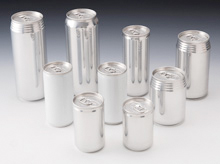
This is a container commonly used for canned beer, canned juice, etc.
Outline
- A 2-piece can is a can made up of two parts, the can body and the can end, formed using DI (Drawn and Ironing) method. It can be filled with beer, fruit juice, etc.
- The interior of the can body is protected with coating or film, making it highly corrosion-resistant and enabling flavor preservation.
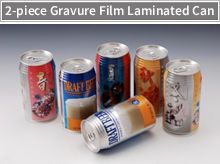
- By applying a gravure-printed film to the exterior, colors that were not possible with conventional printed cans can be expressed, allowing for a high-end image.
-
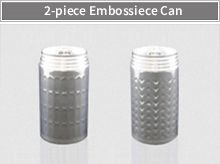
Emboss Forming
By forming the can into a unique shape, the appearance and feel can be differentiated from standard cans, giving it a distinctive feature that strongly appeals to the product image.
-
Foaming Ink
By creating a textured surface, it is possible to create a visually appealing and tactile effect, and a matte design expression is possible.
-
Mirror-Gloss Ink
To create a glossy finish, silver ink containing aluminum powder is used. The gloss is further enhanced by changing the shape of the aluminum powder.
Applicable Contents
Beer, carbonated drinks, sports drinks, teas, fruit juices, alcohol cocktails, Japanese sake, etc.
Available sizes
135ml、190ml、250ml、350ml、500ml
What is a 2-piece can?
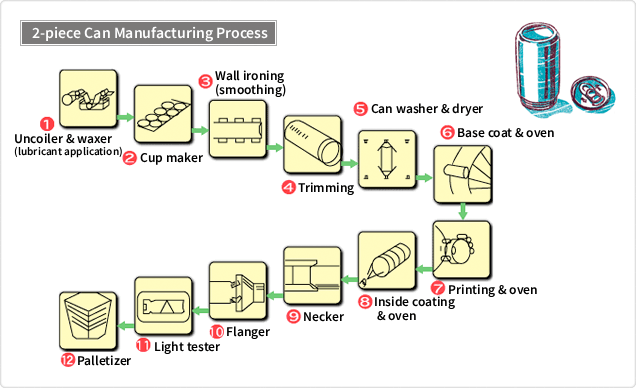
A 2-piece can is a can composed of two parts: the can body which has an integrated can bottom, and and the can end. Manufacturing is done through the following process:
2-Piece Gravure Laminated Can
Traditional 2-piece cans are decorated using offset printing. In order to overcome the limitations of offset printing, Daiwa Can has developed a 2-piece gravure laminated can that offers superior aesthetics compared to conventional 2-piece cans.
Reduced Energy Consumption During Manufacturing
The process of drying the printed cans in an oven which is necessary for conventional printed cans has been eliminated, reducing energy consumption during manufacturing.
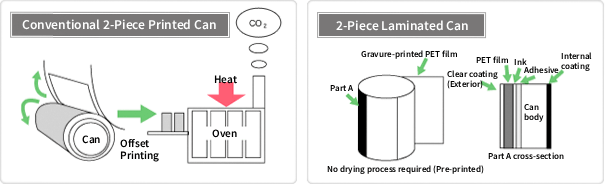
Allowing for a More High Quality Printing
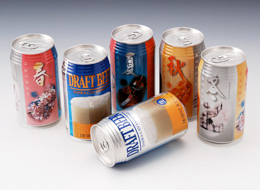 8-color gravure printing is now possible, enabling
pearlescent and photographic prints that were previously
not possible.
8-color gravure printing is now possible, enabling
pearlescent and photographic prints that were previously
not possible.
No Modification to the Customer's Filling Line is Necessary
When switching from conventional printed cans to laminated cans, no changes to the customer's equipment such as fillers or seamers are necessary.

